
The scent of warm vanilla and toasted flour wafting through a Mumbai apartment is a familiar comfort. For many, baking starts as a weekend escape and a way to destress after a long week in the corporate grind of BKC or Lower Parel. You follow a creator on YouTube, successfully pull a tray of fudgy brownies from your OTG, and for a moment, the world feels right. But there is a massive gulf between a “hobby bake” that tastes good and a “professional pastry” that functions as a piece of edible architecture.
In 2026, the Mumbai food scene has moved far beyond the generic “chocolate truffle cake.” The city is currently obsessed with texture, fermentation, and “visual storytelling.” Consumers are no longer just looking for sweetness; they are looking for the crunch of a perfectly laminated croissant, the tang of a 48-hour sourdough, and the artistic flair of a mirror-glazed entremet. If you’ve ever felt the urge to turn your passion into a paycheck, choosing the right professional baking course is the bridge that takes you from your home kitchen to a high-pressure, high-reward career in the patisserie world.
The Evolution of the Mumbai Baker
Baking has transitioned from a domestic chore into a high-stakes design profession. Unlike savory cooking, where a chef can adjust the seasoning mid-way, baking is a science of pre-determination. You have to be a chemist, an engineer, and a designer before the tray ever enters the oven.
To convey a story to a guest in a city as fast-paced as Mumbai, a baker must think like a visualizer. This is why the pastry chef career path is now one of the most respected in the hospitality industry. It’s not just about “lip-smacking food”; it’s about the aesthetics of the plate, the choice of glassware, and the “attention to detail” that creates an unforgettable experience.
Professional Training vs. The “YouTube University”
We’ve all been there, watching a 10-minute video and thinking, “I can do that.” While digital creators like Gemma Stafford have made baking accessible to millions, there is a fundamental limit to what a screen can teach. Baking is a sensory craft.
- The “Feel” of the Dough: You cannot learn the elasticity of gluten or the “windowpane test” through a pixelated screen.
- Troubleshooting in Real-Time: In a professional baking course, a chef-instructor watches your hands. They catch the exact second your butter starts to melt during lamination or why your ganache split.
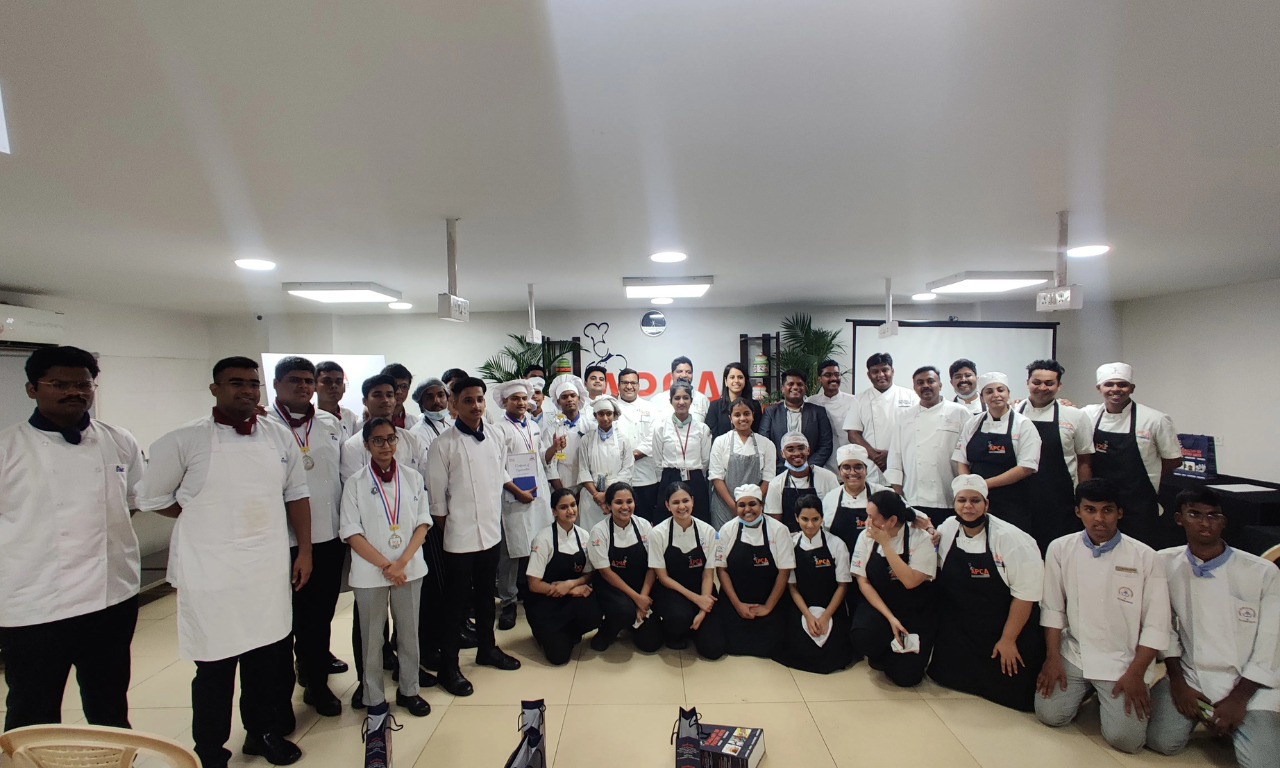
- Equipment Knowledge: Most home bakers work with a standard OTG. A professional program at APCA Mumbai introduces you to deck ovens, proovers, and industrial mixers—the heavy artillery of the professional world.
Mapping the Career Path: From Commis to Executive Pastry Chef
Starting a baking and pastry course isn’t just about learning recipes; it’s about learning the “Brigade de Cuisine”—the military-like hierarchy that keeps a commercial kitchen running.
- Commis (The Foundation): Your entry-level role. You are the one doing the mise en place, measuring to the gram, and ensuring the station is spotless.
- Chef de Partie (The Specialist): You take charge of a section—perhaps the chocolate room or the bread station. Here, your “visualizer” skills are put to the test every day.
- Sous Pastry Chef (The Manager): You oversee multiple stations and help conceptualize new menu items.
- Executive Pastry Chef (The Designer): You are the architect of the entire dessert menu, managing food costs, supplier relationships, and a team of artists.
Essential Skills Needed for a Baker in 2026
If you want to succeed in the Mumbai market, you need a specific “toolkit” of skills that go beyond just knowing how to use a whisk.
- Technical Precision: In baking, $10g$ of extra flour can turn a light sponge into a brick. A professional course drills the importance of the digital scale.
- Sensory Judgment: Learning to “hear” when a crust is done or “feel” the temperature of chocolate without a thermometer.
- Aesthetic Vision: As chefs like Sandeep Kumar point out, the “looks” are the handshake of the dish. You need to understand color theory, negative space on a plate, and garnishing techniques.
- Resilience: The kitchen is hot, the hours are long, and sometimes, despite your best efforts, a souffle falls. A professional baker is defined by how they recover.
Understanding the Investment: Baking Course Fees in Mumbai
Let’s be candid—quality education is an investment. Baking course fees in Mumbai can vary drastically depending on the depth of the program.
| Course Type | Typical Duration | Approximate Fee Range (2026) | Best For |
| Hobby Workshops | 1-3 Days | ₹3,000 – ₹15,000 | Testing the waters |
| Part-Time/Weekend | 12 Weeks | ₹80,000 – ₹1.5 Lakh | Working professionals |
| Professional Diploma | 9-12 Months | ₹3 Lakh – ₹8 Lakh | Serious career changers |
At the Academy of Pastry and Culinary Arts (APCA), the focus is on ROI—Return on Investment. Our graduates don’t just get a certificate; they get a direct pipeline to the best hotels (Taj, Oberoi, Marriott) and boutique patisseries in the country.
Why Mumbai is the Best Place to Learn
Mumbai is a city of contrasts. You have the traditional Irani cafes serving Maska Bun alongside avant-garde pastry boutiques in Bandra. Studying at APCA Mumbai puts you in the center of this dialogue. Our center near Marol Metro Station isn’t just a school; it’s a hub where international Master Chefs come to share their secrets.
In a professional program here, you’ll dive into:
- The Texture Revolution: Learning how to build layers of “crunchy, creamy, and gooey.”
- Health-Forward Baking: Mastering gluten-free, sugar-free, and plant-based desserts that don’t compromise on taste.
- Artisan Sourdough: Understanding the long-fermentation process that has become a staple for health-conscious Mumbaikars.
Choosing Your Goal: Hobbyist or Professional?
The most important “attention to detail” isn’t on the plate—it’s in your career planning.
- If your goal is a home-based business: Look for courses that include “The Business of Baking” like costing, packaging, and Instagram marketing.
- If your goal is a 5-star hotel: You need a full-time, high-intensity diploma that focuses on volume and consistency.
As Chef Momin Faqi suggests, every dish is a journey. Your career is no different. You start with a sketch, your dream and you use a professional baking course to execute that idea into a reality.
Final Thoughts: The Flour-Dusted Future
The journey from hobby to profession is rarely a straight line. It’s a process of folding, resting, and rising. Mumbai is waiting for the next great pastry designer, and that person could be you. Whether you want to master the art of the French macaron or the science of the perfect loaf, the “Architecture of the Plate” is a language you can learn.
Don’t just bake for your family; bake for the world. Spend the time on your craft, and let the aesthetics of your work tell your story.