

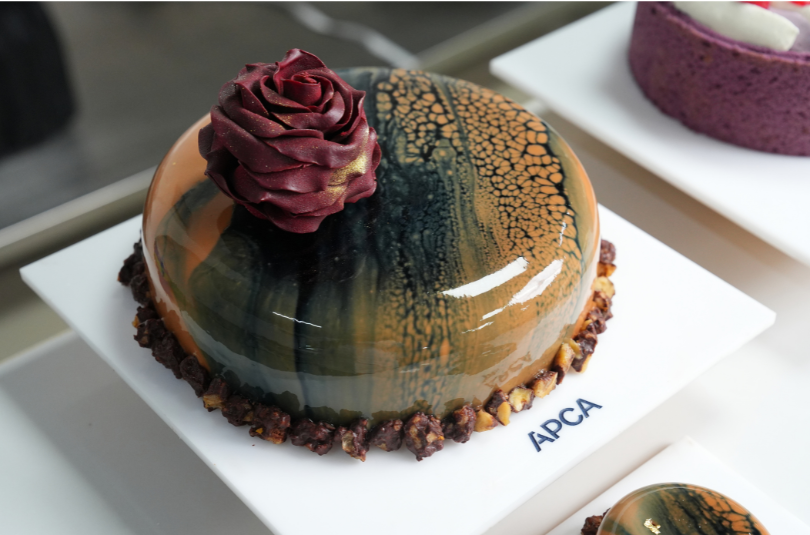
Quick answer: Pastry chefs balance dessert by treating sweetness as a base and then adding acid to cut richness, bitterness for depth, and contrasting textures to control how flavor reaches the tongue. They pick one anchor ingredient, build the other elements around it, and then taste and adjust until no single element dominates.
The dessert that looks simple
Picture a sphere about the size of a large marble. The outside is a thin yuzu gelée. Inside sits a dark chocolate ganache that is still soft at the center. A dusting of toasted cacao nib clings to one side, and a single edible flower sits on top.
You bite in. The gelée gives first, cool and tart. Then the ganache melts, rich and a little bitter. The nibs add a dry crunch and a roasted note right at the end.
Nobody would call that bite “sweet,” even though sugar is holding every layer together. It feels finished. It also makes you want a second one, which is the real test of a dessert.
So what is going on? The answer is balance, and it is more deliberate than most home bakers realize. Modern pastry treats sweet, sour and bitter as a conversation, with salt and umami in supporting roles, and treats texture as a fourth voice in that conversation. This post walks through how chefs handle each one.
Why does balance matter so much in modern desserts?
Balance matters because sweetness alone tires the palate quickly. A dessert built on sugar with one accent flavor is pleasant for two bites and heavy by the fifth. Contemporary pastry aims for desserts you can finish, and that means adding contrast so each bite still tastes interesting.
Several things pushed pastry in this direction.
Palate fatigue: Constant sweetness dulls your response to it. Acid, bitterness and crisp textures reset your attention, so the last bite registers as clearly as the first.
Global influence: Cooks now work with ingredients from cuisines where sweet, sour and bitter have always shared a plate. Think of tamarind in Southeast Asia, chile and lime on fruit in Mexico, sour cherry and rosewater in Middle Eastern sweets, and the bitter edge of matcha and hojicha in Japanese confections.
Better understanding of taste: Research on taste mixtures has long shown that flavors influence each other. Sour and sweet tend to suppress each other in a mixture, and bitterness and sweetness do the same. A 2020 study in Foods on sucrose with citric and tartaric acid, for example, looked at exactly this kind of interaction across Chinese and Danish consumers (Foods, 2020). Chefs use the effect on purpose.
A wish for a story: A plated dessert can move from cold to warm, soft to crisp, tart to rich. That progression is part of the appeal.
What goes wrong when a dessert is out of balance?
Too much sugar reads as flat and cloying. Too much acid or bitterness reads as harsh, especially without enough sweetness or fat to cushion it. Poor texture is just as damaging: an all-soft plate is boring, and a gritty or soggy component ruins an otherwise good flavor.
The goal is not equal parts of everything. Think of sweetness as the canvas. Sour, bitter and texture are the brushstrokes that make a picture out of it.
How do chefs use sweetness beyond adding sugar?
Chefs choose sweeteners for what they do besides sweetening. Different sugars change moisture, browning, chew and flavor. Sweetness also softens harsh notes, carries aroma, and shapes structure, so it is a working ingredient and not just a taste.
Table sugar is only one option. Glucose syrup is less sweet and keeps sugar from crystallizing. Fructose tastes sweeter than sucrose. Honey and invert sugar attract water, which keeps cakes and caramels softer for longer. Maple, palm sugar and molasses bring their own smoky or caramel notes and brown more readily in the oven.
Here is the part that changes how you formulate. A tart element makes sweetness taste cleaner and brighter, so a chef can often use less sugar and still get a dessert that tastes sweet. Fruit concentrates and reductions do something similar by packing sweetness and flavor into the same ingredient.
A newer twist is to build sweetness on a savory base. Miso, soy, aged cheese and good olive oil add salt and depth, and salt also tends to mute bitterness, so the sweetness that sits on top reads as more rounded. Miso caramel is the familiar example.
How does sourness lift and cleanse a dessert?
Sourness cuts fat, brightens aroma and makes sweetness taste cleaner. In pastry it does the job that a squeeze of lemon does on grilled fish: it keeps rich food from feeling heavy. It also affects texture, because acid helps set some gels and changes how proteins and sugars behave.
The sources go well beyond lemon. Chefs reach for yuzu, lime, bergamot and passion fruit. They also use rhubarb, green apple, cranberry, tamarind and green mango. Vinegars (sherry, rice, fruit) work in sauces and gels. Fermented ingredients such as yogurt, crème fraîche, cultured butter, kombucha and shrubs add a rounder sourness with some savory depth.
Each role matters in practice:
- Cutting richness: A yuzu curd inside a chocolate tart stops the ganache from coating your mouth.
- Lifting aroma: Lime zest makes coconut mousse taste more like coconut.
- Sharpening sweetness: Contrast makes the sweet parts register more clearly.
- Adding depth: Fermented sourness brings a savory dimension that plain citric acid does not.
- Changing structure: Classic fruit pâte de fruit and jam depend on the right mix of pectin, sugar, and acid to set, as the University of Georgia Extension’s guide to pectin explains.
The modern move is to let sour lead. Instead of an accent, a tamarind or sea buckthorn sorbet can be the main event, with sugar and fat placed around it. Odd pairings work too, such as black vinegar with chocolate.
What does bitterness add to a dessert?
Bitterness adds depth and a lingering finish. It stops sweetness from tasting flat, gives desserts an adult backbone, and pairs well with both sweet and sour. It is also the easiest element to overdo, so chefs use it with a measured hand and usually soften it with sugar, fat or a little salt.
Common sources include dark chocolate and cocoa, coffee, tea (matcha and hojicha especially), grapefruit and orange peel, walnuts and pecans, and carefully caramelized sugar. Spices like clove and cinnamon carry a bitter edge too.
The difference between a 70% dark chocolate and a milk chocolate shows the effect. Milk chocolate is mostly sweet and creamy. Dark chocolate adds bitterness and a little astringency, so the same amount of sugar feels less dominant.
Astringency deserves its own mention. Tannins in tea, cocoa and nuts leave a drying feeling in the mouth. Fat and moisture soften it, which is why a bitter cocoa sponge feels very different next to a spoon of crème fraîche.
Modern pastry treats bitterness as a feature. Chefs pick cocoa by origin and roast for the specific bitter character they want, infuse tea into creams, and use nibs or coffee grounds as crunchy components. The rule for home cooks is simple: pair bitterness with fat or a pinch of salt, and add it in small steps.
Why is texture as important as taste?
Texture changes how and when flavor reaches you. Fat coats the tongue and slows the release of some flavors, while watery or acidic components clear the palate faster. A crisp shard breaks and releases aroma at once. Texture also affects how fresh a dessert seems.
There is good evidence that what we hear and feel changes what we taste. In a well-known experiment, Massimiliano Zampini and Charles Spence found that changing the crunch sound of a potato chip changed how crisp and fresh people rated it (Journal of Sensory Studies, 2004). Crunch is part of the flavor, not a garnish.
Pastry offers a wide range of textures to work with:
| Texture | Examples | What it does in balance |
| Crisp, crunchy | Tuile, praline, candied nuts, freeze-dried fruit | Releases aroma fast and adds contrast |
| Creamy, smooth | Ganache, mousse, custard, curd | Coats the mouth and carries fat-soluble flavor |
| Chewy | Marshmallow, pâte de fruit, dried fruit | Slows the bite and lengthens flavor |
| Aerated | Meringue, sponge, espuma | Lightens richness and mellows sharpness |
| Gel | Agar or pectin gel, gelée | Delivers clean, fast flavor release |
| Sandy, crumbly | Shortbread, crumble | Soaks up sauce and adds a dry counterpoint |
| Fizzy | Popping candy, carbonated fruit | Adds surprise and a fresh feeling |
Order matters as much as variety. In choux, parfait and layered entremets, the move from crisp outside to creamy center is much of the pleasure. Modern plating pushes this further, building a dessert around only three textures, say airy meringue, a liquid center and a shattering sugar shell, and then adding one small accent, like a single shard or a dusting of powder, for impact.
Texture also protects structure. A thin layer of chocolate or cocoa butter can keep a crisp base from going soggy under a mousse, and stiff components hold intricate shapes together.
How do pastry chefs put it all together?
Chefs use a framework, not a recipe. They define the experience they want, choose one anchor ingredient, map how the other elements will support or contrast with it, and then taste and adjust repeatedly. Each change, even swapping lemon for yuzu, shifts the whole balance.
1. Define the core experience: Is this a bright finish to a heavy meal, a slow chocolate moment, or a playful surprise? The answer sets every later choice.
2. Choose the anchor: This is the element that cannot be compromised, such as a single-origin chocolate, a rare citrus, or a technique like brown butter.
3. Map the interactions: Ask what the anchor needs.
- If the anchor is rich, sweet chocolate: How much acid (yuzu, passion fruit) will cut it? How much bitterness (cocoa percentage) adds depth without harshness? Which textures give contrast, and where in the bite should they land?
- If the anchor is very sour, like a tamarind shrub: What sweetener (honey, brown sugar) softens it without turning it cloying? What bitter note (dark chocolate shards, coffee powder) adds complexity? What texture (crisp wonton, silky coconut cream, crunchy pepitas) keeps it interesting?
4. Taste, adjust, repeat. Balance is found by tasting, not by formula. Sensory science explains why the adjustments work, and intuition tells you when to stop.
5. Respect the ingredient. A honey’s floral notes, a chocolate’s natural acidity and a fruit’s pectin content all change the outcome. Work with those properties instead of forcing them.
Done well, balance does not flatten flavors into blandness. It creates tension that keeps each bite changing and makes the whole more satisfying than its parts.
The lasting value of balance
Mastering the interplay of sweet, sour, bitter and texture is what separates competent pastry from a dessert people remember. It is the working vocabulary of the craft.
A well-balanced dessert also asks something of you in return: attention. There is the first impression, then the shift as flavors develop, then the contrast between crisp and soft, and finally the finish that lingers after the plate is empty. Sugar, acid, cocoa and technique become something that feels complete because each element has a reason to be there and none of them crowds out the rest.
Try it yourself
Next time you eat a dessert, slow down. Name the sweet, sour and bitter notes, and notice the textures. Then imagine removing one. What changes?
Or run a simple test. Add a small pinch of flaky salt, or a few drops of vinegar, to a chocolate chip cookie and compare it with a plain one. The difference is usually obvious on the first bite.
Frequently asked questions
What is the most important element in balancing a dessert?
There is no single one, but acid is the most common fix for a dessert that tastes heavy or too sweet. A small amount of citrus, vinegar or fermented dairy cuts fat and sharpens sweetness. Texture contrast is a close second, since it keeps every bite from feeling the same.
How do you make a dessert less sweet without losing flavor?
Add acid, bitterness or salt instead of only removing sugar. A little lemon, dark chocolate or a pinch of salt makes sweetness taste cleaner and less cloying. You can then reduce sugar a little at a time while tasting, because too little sugar also affects texture and structure.
Why do many modern desserts use yuzu, miso or vinegar?
These ingredients add sour, savory or fermented depth that plain sugar cannot. Yuzu gives aromatic tartness that cuts richness, miso adds salt and umami under caramel or custard, and vinegar brings sharpness with little competing flavor. Together they make sweetness feel less flat and more complete.
Does texture really change how a dessert tastes?
Yes. Texture affects how fast flavor is released and how fresh food seems. Fat slows release and makes flavors linger, while crisp pieces release aroma quickly. Research on crunch sounds, such as the Zampini and Spence potato chip study, shows that what we hear and feel changes perceived crispness and freshness.
How can a home baker practice flavor balance?
Start with one dessert you already make and change a single element at a time. Add a squeeze of citrus to a rich cream, a pinch of salt to caramel, or a crunchy topping to a soft cake. Taste before and after each change and write down what you notice.