

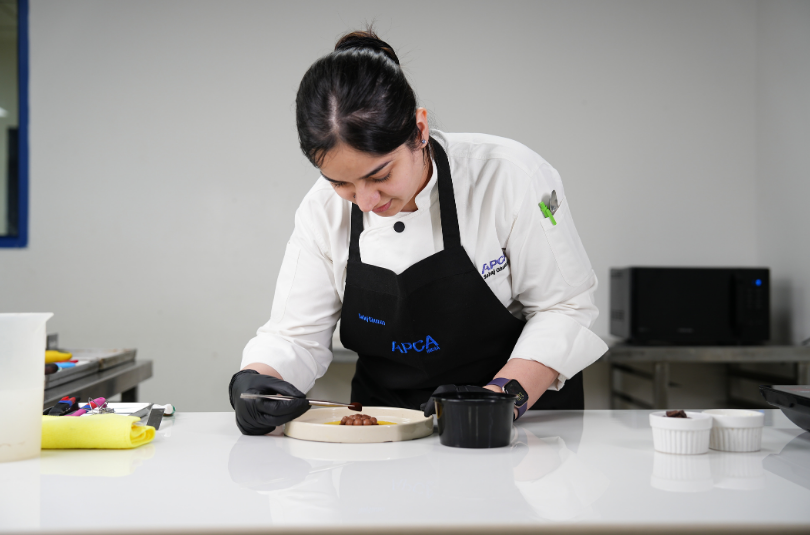
Quick answer: Professional chefs don’t season once and walk away. They build flavour in stages: an aromatic base, whole spices cooked early, ground spices bloomed in fat, and fresh herbs added at the very end. Each addition targets a different moment in the dish, and the order matters as much as the ingredients themselves.
Home cooking and restaurant cooking often start with the same spice rack. The difference shows up in timing, not in the shopping list. A chef who tastes a sauce and reaches for oregano isn’t guessing. They’re reading the dish, deciding what’s missing (brightness, warmth, bitterness, salt) and choosing the tool that fixes it at exactly that stage of cooking.
What “Building Flavour” Actually Means in a Professional Kitchen
Building flavour means adding herbs and spices at different points in the cooking process instead of dumping everything in at once. Each stage extracts something different: whole spices release oils slowly under heat, ground spices bloom fast in fat, and fresh herbs contribute aroma that would burn off if added too early.
Think of a dish as having a timeline, not a single moment of seasoning. Salt goes in early to season ingredients as they cook, not just the finished plate. Spices go in when they can release the most flavour without scorching. Herbs go in last, when their oils are still intact. Skip the sequence and you get a dish that tastes flat, or one where a single note (usually salt, or a heavy spice) drowns out everything else.
Start With the Aromatic Base
Before any herb or spice touches the pan, most professional dishes start with an aromatic base: onion, garlic, celery, carrot, or a regional equivalent, sweated slowly in fat. This isn’t decoration. It’s the foundation every later layer of seasoning sits on top of.
A pinch of salt added at this stage does double duty. It draws moisture out of the aromatics, which speeds up softening, and it seasons the dish from the inside rather than the surface. Chefs who skip this step and season only at the end tend to end up with a sauce that tastes seasoned on the palate but hollow underneath, because the base ingredients themselves were never given a chance to develop flavour.
Whole Spices Go in Early, Ground Spices Go in Next
Whole spices, bay leaves, cinnamon sticks, cardamom pods, black peppercorns, are added at the start of long cooking because they release their compounds slowly. Ground spices go in a little later, once there’s fat in the pan to carry their flavour through the dish.
The reason comes down to concentration. Grinding a spice exposes far more surface area to air and heat, which makes it more aromatic immediately but also more fragile. A whole clove can simmer in a braise for hours and still have something left to give. Ground cinnamon added to the same braise at the start would likely turn dull and slightly bitter by the time the dish is done.
Blooming Spices in Fat: Why Chefs Cook Spice Before They Cook Food
Blooming means heating ground or whole spices briefly in oil, ghee, or butter before adding liquid or the main ingredients. It works because many of the aromatic compounds in spices are fat-soluble rather than water-soluble, so oil pulls flavour out of a spice far more efficiently than water or stock ever could.
This isn’t a modern trick. Cooks across South Asia, the Middle East, and China arrived at versions of it independently, long before anyone had a name for fat-soluble compounds. Research published in the Journal of the Science of Food and Agriculture backs up what those kitchens already knew by feel: cooking thyme, for instance, can make its flavour compounds many times more intense than the raw herb, while garlic’s sharper notes soften and mellow once heat breaks down its allicin.
In practice, blooming takes less than a minute. The spice goes into warm, not smoking, fat and stays there just long enough to turn fragrant, usually 15 to 30 seconds for ground spices and slightly longer for whole ones. Past that point, the goal shifts from “release flavour” to “not burn it,” and burnt spice turns bitter fast.
Fresh Herbs Are a Finishing Move, Not a Starting One
Delicate fresh herbs, basil, cilantro, chives, parsley, mint, are usually stirred in at the very end of cooking or scattered over the finished plate. Their flavour compounds are volatile enough that extended heat cooks them away entirely, leaving behind a faded green colour and none of the brightness that made the herb worth using.
Hardier herbs behave differently. Rosemary, thyme, and sage can survive longer cooking, especially as whole sprigs, and are often added earlier alongside the aromatic base. Sturdy sprigs can even ride along with a roast for its full cooking time, since their oils are more heat-stable than a leaf of basil could ever be.
Fresh vs. Dried: When Chefs Reach for Each
The standard conversion in professional kitchens is roughly 3:1: about three parts fresh herb for every one part dried, since drying concentrates the volatile oils into a smaller volume. That ratio shifts by herb. Thyme and oregano hold up well dried and convert reliably. Basil and cilantro lose most of their character in the drying process and are best used fresh or frozen in oil.
Timing follows the same logic as fresh vs. whole vs. ground spices. Dried herbs need time in a warm, moist environment to rehydrate and release their oils, so they go in earlier. Fresh herbs are added late specifically to avoid that same process happening too far, which would strip away the brightness dried herbs never had in the first place.
Matching Herbs and Spices to the Protein or Base Ingredient
Chefs pair seasoning to how delicate or assertive the main ingredient is, not just to what tastes good in isolation. A mild, white-fleshed fish like cod or halibut is easily overwhelmed, so it’s paired with light, citrusy touches: dill, parsley, fennel seed, a little lemon zest. Oily fish like salmon or mackerel can carry bolder company, including smoked paprika, mustard seed, or black pepper.
The same logic scales up. Chicken absorbs herbs well and takes to almost anything from sage and thyme to smoked paprika. Beef and lamb, with their stronger natural flavour, can stand up to bolder, earthier spices, but chefs tend to go lighter on salt when the seasoning blend is already assertive, since piling salt on top of a heavily spiced cut easily tips a dish from balanced into overpowering.
Seasoning for Balance, Not Just Intensity
Professional seasoning isn’t about maximizing spice. It’s about balancing five basic tastes: salty, sour, sweet, bitter, and umami, so no single note dominates the plate. A dish that tastes “off” is often missing one of these rather than missing more seasoning altogether.
That’s why a squeeze of lemon can fix a dish that already has plenty of salt and spice; it’s adding acidity, not more of what’s already there. A pinch of sugar can round out a sauce that’s gone too sharp. A splash of fish sauce or a spoonful of miso adds umami depth without adding heat. Chefs taste constantly through this lens, asking not “does it need more seasoning” but “which of the five tastes is missing right now.”
Tasting as You Go: The Real Skill Behind the Technique
None of the above works without tasting at every stage, not just at the end. Professional cooks season the aromatics, taste. Season the protein separately, taste. Adjust the sauce as it reduces, taste again. By the time a dish reaches the pass, it’s been adjusted five or six times, not seasoned once and hoped for the best.
Over years of doing this, chefs build what many describe as a flavour memory: a mental library of how a spice behaves in a given dish, built from hundreds of repetitions rather than a single formula memorized from a recipe card. That’s less a secret technique and more the compounding result of paying close attention, dish after dish, until the timing becomes automatic.
Frequently Asked Questions
Do professional chefs add all their herbs and spices at once?
No. Chefs add seasoning in stages: whole spices early, ground spices bloomed in fat partway through cooking, and delicate fresh herbs at the very end. Adding everything at once usually means the fresh herbs overcook and the base never develops proper depth.
Why do chefs cook spices in oil before adding liquid?
Many spice compounds are fat-soluble, so oil extracts and carries their flavour more effectively than water or stock. Briefly heating spices in fat, known as blooming, releases more aroma and taste than simply stirring the same spices into a finished sauce.
What’s the correct ratio for substituting dried herbs for fresh?
The standard professional conversion is about 3:1, roughly one part dried herb for every three parts fresh. Hardier herbs like thyme and oregano convert reliably at that ratio, while delicate herbs such as basil and cilantro lose more flavour in drying and may need adjustment.
Should fresh herbs go in at the start or end of cooking?
Fresh, delicate herbs go in at the end, since their aromatic oils break down under sustained heat. Hardier herbs like rosemary and sage can go in earlier, often as whole sprigs, because their flavour compounds hold up better over a longer cooking time.
How do chefs decide which herbs and spices to pair with a protein?
Pairing follows the intensity of the main ingredient. Delicate proteins like white fish get light, citrusy herbs so the flavour isn’t overwhelmed, while richer meats and oily fish can carry bolder, earthier spices without one flavour drowning out the other.earthier spices without one flavour drowning out the other.