If you just finished culinary school in Bangalore, the job market you’re walking into looks nothing like the one your seniors graduated into five years ago. Delivery-only kitchens are now a real, well-funded career track, not a fallback. India’s cloud kitchen market grew from $1.24 billion in 2025 to an estimated $1.39 billion in 2026,...
Author: admin
Best Restaurants and Bakeries in Gurgaon Every Aspiring Chef Should Study
Quick answer: Gurgaon’s strongest training ground for aspiring chefs sits inside five-star hotel kitchens like The Oberoi’s Amaranta and Threesixtyone°, the Trident’s Cilantro, and the Westin’s Prego, paired with bakeries such as L’Opera, Theobroma, and the Oberoi Patisserie & Delicatessen. Together they cover coastal Indian cooking, live-fire technique, European patisserie, and viennoiserie at a level...
Top Internship & Placement Opportunities for Culinary Students in Mumbai
Culinary students in Mumbai find internships mainly through three channels: five-star hotel kitchens (Taj, Oberoi, Marriott, Hyatt, ITC), government-run institutes like IHM Mumbai that build a paid second-year internship into the course, and private culinary schools such as ITM IHM or the Academy of Pastry Arts, which run their own recruiter networks. Cruise lines, QSRs...
Stocks, Sauces & Soups: The Building Blocks of Professional Cooking
Ask a culinary instructor what separates a home cook from a line cook, and most won’t mention knife skills first. They’ll mention stock. Everything downstream- the sauces that finish a plate and the soups that open a menu, depends on a pot of bones, vegetables, and water that someone tended for hours before service even...
Sugar in Baking: It’s More Than Just Sweetness
Quick answer: Sugar sweetens, but in a batter or dough it also holds onto water, slows gluten formation for a softer crumb, drives browning through caramelization and the Maillard reaction, and stabilizes whipped egg whites. Cut the sugar in a recipe, and you’re not just removing sweetness. You’re pulling out moisture, tenderness, and color at...
How Professional Chefs Use Herbs & Spices to Build Flavour
Quick answer: Professional chefs don’t season once and walk away. They build flavour in stages: an aromatic base, whole spices cooked early, ground spices bloomed in fat, and fresh herbs added at the very end. Each addition targets a different moment in the dish, and the order matters as much as the ingredients themselves. Home...
Bread Fermentation Explained: Why Time Matters in Professional Baking
Quick answer: Fermentation is where bread actually gets made. Time and temperature together set gluten strength, gas retention, and the acids that build flavor. Rush it, and you get pale, gummy, one-note bread. Most professional doughs ferment between 20°C and 26°C, with cold retardation extending that window to 12 hours or more for deeper flavor....
What Is Pâte à Choux? The Pastry Behind Éclairs, Profiteroles & Churros
Quick answer: Pâte à choux (pronounced pat-ah-SHOO) is a French dough made from just butter, water, flour, and eggs, cooked twice — once on the stovetop, once in the oven or fryer. It has no baking powder or yeast. Steam alone puffs it into a hollow shell, which is why the same dough becomes éclairs,...
How APCA Culinary Students Master Global Cuisines Through Practical Training
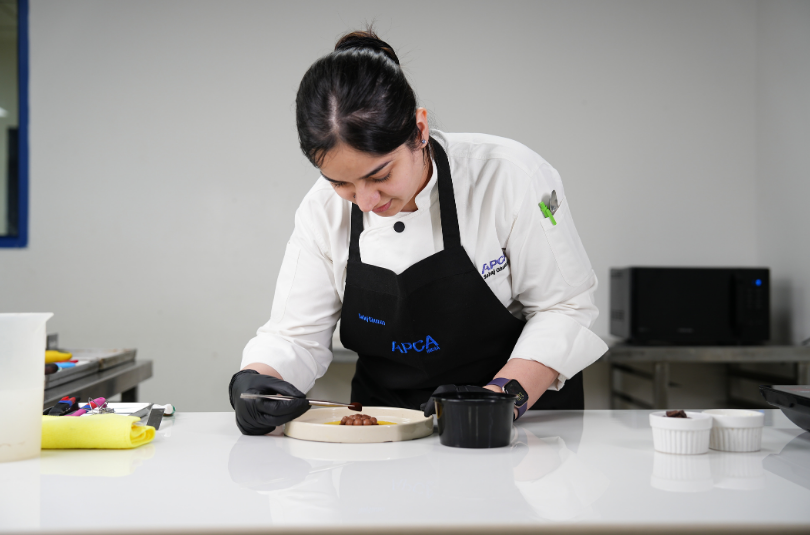
Ask any working chef what culinary school actually taught them, and you’ll rarely hear “the textbook.” You’ll hear about the night they burned three batches of caramel before getting it right, or the chef-instructor who made them re-do a mother sauce four times because the seasoning was off by a pinch. That’s the part of...
What Makes APCA Gurgaon a Great Choice for Aspiring Professional Chefs
If you’re comparing options for a chef course in Delhi NCR, APCA Gurgaon is worth putting near the top of your list. The Academy of Pastry and Culinary Arts runs its Gurugram campus on live-kitchen training rather than classroom lectures, pairs students with chefs who’ve actually worked in five-star kitchens, and backs it all with...