
Ask most people what a professional baker does and they will draw a pretty narrow picture: cakes, bread, pastries, and maybe desserts. What won’t be described is the sheer scope of environments a working pastry professional navigates through a career, because most cooking programmes don’t teach it this way.
Hotels have banqueting operations that require savoury canapés to be produced in hundreds at a time. In India’s big cities, corporate catering contracts are increasingly demanding completely eggless menus to cater to vegetarian and Jain dietary requirements for large guest lists. Pastry teams at fine-dining restaurants are expected to plate individual desserts to a visual and textural standard that is indistinguishable from the savoury kitchen’s output. These are not outlier cases. These are normal professional settings and they actually require different skill sets.
This is exactly what APCA tackles. Its professional baking courses curriculum includes eggless baking, savoury canapé production and plated dessert technique, considered preparation for the range of environments graduates will actually work in. That’s what that training is. And why it matters.
Commercial Necessity, Not a Dietary Trend: Eggless Baking
The demand for eggless baking in the Indian market is structural and not a fad. Many people eat vegetarian food, which does not contain eggs. Of these many follow the stricter Jain food practices. A professional baker in India is not a specialist for being able to make eggless versions of the entire range of pastries – cakes, tarts, mousses, breads, brioche, choux. That’s a basic commercial requirement.
The issue with eggless baking is that eggs serve so many technical functions at once: They provide structure by coagulating proteins, leaven by trapping air while beating, emulsify batters, hold moisture and bind things together. Removing the egg doesn’t solve one problem – it creates five. A serious course in eggless baking teaches students about the different functions that different substitutes fulfill: aquafaba for meringue and aeration, flaxseed gel or chia for binding, commercial egg replacers for structure in cakes, and specific adjustments to fat ratios and leavening chemistry to account for what the egg was doing.
APCA’s eggless pastry diploma training is more than substitution charts. The students re-invent classic recipes from first principles, knowing exactly what functional property needs to be swapped out in each particular product. The student who graduates with this knowledge can run an eggless menu at scale without compromising on quality – and that is a skill set that directly translates to employment opportunities and independent business viability in the Indian market.
Savoury Canapés Pastry Skill Meets Hospitality Volume
Savoury canapé training is at the intersection of pastry technique and hospitality operations and is one of the most consistently underrepresented areas in professional baking courses. Canapés are supposed to be easy. Nothing could be more untrue on a professional level.
Producing 800 canapés for a hotel banquet at a corporate function requires production planning, correct portioning, uniform finishing and knowledge of how each element performs under various conditions, whether on a pass, under lights, on a service tray, or at room temperature for forty-five minutes. All of this requires pastry components within canapés — vol-au-vent cases, choux-based gougères, shortcrust tartlets, tuiles and blinis — to maintain structural integrity and visual quality.
APCA’s canapés training covers classical and modern formats, hot and cold applications with a focus on production efficiency and quality control at volume. Students learn about flavour pairing across sweet and savoury, textural contrast in bite-sized presentations and the specific plating and assembly disciplines that allow a small team to produce large quantities without losing consistency. These are not instinct-learned skills – they are skills learned through deliberate, structured practice.
Plated Desserts: The Benchmark That Distinguishes Production Bakers from Pastry Chefs
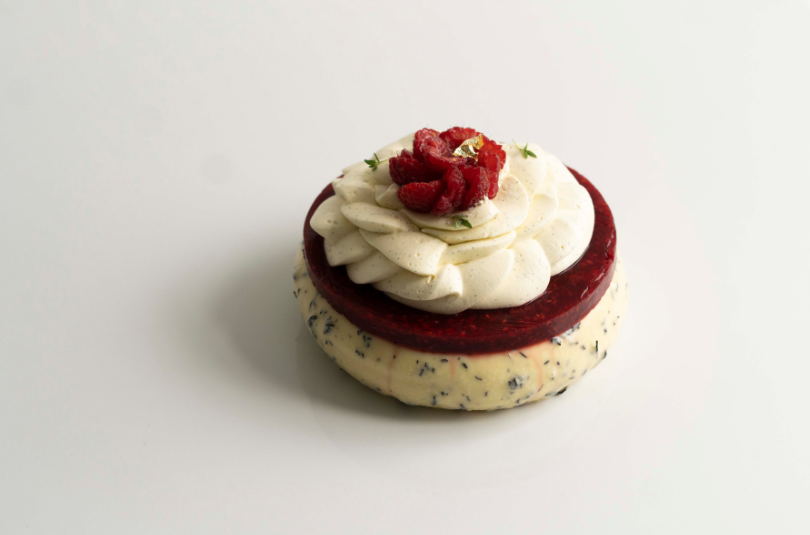
The difference between a production baker and a pastry chef is most visible on the plated dessert pass. In commercial baking you are looking for yield, consistency and cost effectiveness on large batches. All that, plus real-time individual composition, textural contrast across multiple components, temperature management across elements on the same plate and visual presentation that holds up under photographic scrutiny. Plated dessert work.
An advanced plated desserts course trains students to design and execute multi-component desserts with a base element, one main flavour component, textural contrast via tuiles, crumbles or aerated elements, a sauce or coulis applied with finesse, and a garnish that contributes rather than decorates. Each element has to stand on its own and play together.” Cover one and cover seventy must be the same plate and must be put together within the time allowed by service.
APCA’s dessert plating training covers traditional French-influenced compositions and modern Asian-inspired presentations reflective of the regional market. Plating beautifully at leisure and plating beautifully under pressure are two different skills and students work under timed conditions that mimic actual service pressure.
Professional Baking Needs Range, Not Just Depth
In culinary education, the goal is generally taken to be specialisation. Focus on one thing — chocolate, bread, wedding cakes — and be the best at that thing. That is true for some career paths. But for most working pastry professionals, especially in the first five to eight years of a career, versatility is what the market really pays for.
The pastry kitchen in a hotel requires someone who can oversee the breakfast viennoiserie in the morning, supervise the production of savoury canapés for a lunch-time event and plate individual desserts for the fine dining outlet in the evening. A Mumbai or Delhi catering outfit needs a professional baker who can manage eggless menus along with conventional menus served at the same event without compromising on quality. These are actual job descriptions. The professional baking courses that teach students across this spectrum aren’t watering down the training; they’re mapping it to how kitchens actually operate.
APCA deliberately builds this versatility into its eggless pastry diploma and wider professional baking curriculum, because the school’s orientation is towards graduate employability and business readiness – not programme prestige built on artificial narrowness.
What This Means for Your Work
The three skill areas covered in this blog – eggless baking, savoury canapés and plated desserts – fill different gaps in the market. Eggless competency unlocks India’s largest dietary segment. Savoury canapé skills make you instantly employable in the banqueting and events operations which is a huge chunk of hospitality industry employment. Plated dessert technique is where the salary and progression accelerate from production level to chef level work.
None of these things happen by accident. They occur because the professional baking courses you choose either equip you for the entire range of professional contexts — or not. APCA’s curriculum is built around the former.
The kitchen you want to work in is already there. The question is, is your training preparing you for that?
Frequently Asked Questions
Q1. Is eggless baking technically inferior to conventional baking, or can the results actually be the same?
If the functions of the eggs are substituted correctly, eggless baking can be as good as the traditional baking. Effective recipes deal with each of these factors separately (structure, aeration, binding, emulsification, and moisture) rather than use simple substitutions. This is a functional reformulation approach taught by APCA’s eggless baking course that enables students to create an eggless cake, tart and dessert with the same quality, texture and taste as conventional baked products.
Q2. What types of savoury canapés are included in APCA’s training? Are dietary variations included?
The savoury canapés module includes classic and modern formats such as gougères, profiteroles, tartlets, blinis, crostini and modern day bites. Students learn hot and cold preparations, and master vegetarian, vegan and eggless variations to efficiently deliver diverse canapé menus for professional events.
Q3. What type of real restaurant service situations does APCA’s plated desserts course prepare students for?
The difference is being able to perform under pressure. Students at APCA are trained in classroom and restaurant style plating with timed exercises to develop speed, consistency and precision. They employ professional mise en place techniques and rehearse preparing and assembling desserts to order repeatedly, honing quality that remains consistent even in a busy service. This hands-on training hones the skills coveted by head pastry chefs in industry-ready pastry professionals.
Q4. If I complete APCA’s eggless pastry diploma, will it help me to start my own baking business in India?
An eggless pastry diploma can help you stand out in the growing premium baking market in India. It gives you the ability to develop skills in making consistent quality eggless products, which will give you a good base for a bakery business. Long-term success also depends on branding, pricing, marketing and operations.
Q5. What is the difference between professional baking courses at APCA and learning from online tutorials and self-study?
Online tutorials teach you how to follow recipes. Professional baking courses teach you the science behind them. Hands-on training, industry-standard equipment and expert guidance help develop real-world kitchen skills, consistency and troubleshooting skills that prepare students for successful careers in the world of baking.